Microscopy and cellular imaging

Leader: Mathieu ERHARDT

Description

The microscopy facility was the first technology platform established in the IBMP in 1998. It’s scientific programme aims at understanding the expression of plant or animal genes over space and time at various levels. Microorganisms or biomaterials studied by partner research units are other topics of interest. Our facility follows official guidelines for « Plates-Formes Technologiques du Vivant » and has received RIO 2001, 2004 and 2006 labels. It’s part of the larger Strasbourg Esplanade Cell Imaging Facility that allows sharing devices and knowledge from 7 research units from CNRS, INSERM, UNISTRA and INRA.

Missions

  • Assist research from IBMP and partner research units
  • Develop and implement new imaging technologies
  • Give appropriate one-to-one or group training to research staff
  • Get involved in microscopy education and science popularization
  • Make sure our devices are up and running
Expertises

Electron Microscopy and histology

Manager : Mathieu ERHARDT

Provides expertise, development and training for the following technologies:

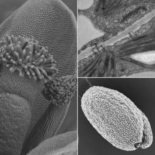
  • TEM, SEM, serial block face imaging
  • Histology, cytology, in situ hybridization

Optical microscopy and bioimage analysis

Manager : Jérôme MUTTERER

Provides expertise, development and training for the following technologies:

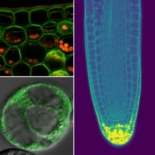
  • Brightfield , fluorescence, confocal microscopy, fluorescence lifetime imaging
  • Image Processing

Members

Recent publications

  • CHEMINAT M., WAECKERLE L., ALIOUA A., COGNAT V., ERHARDT M., KOECHLER S., ROGER K., MULLER D., PFLIEGER D., ZUMSTEG J., SCHALLER H. and ARSÈNE-PLOETZE F.

    Genomic and biological characterization of Streptomyces strains isolated from barley

    BMC Microbiology, 26(1), 2025. | DOI : 10.1186/s12866-025-04493-4DOI logo

  • ZHANG X., ZUMSTEG J., ERHARDT M., SHEN W.H. and BERR A.

    The histone methyltransferase SDG26 shapes cold stress responses in Arabidopsis through chromatin-based regulation of ABA-dependent and ABA-independent pathways

    BioRxiv, , 2025. | DOI : https://doi.org/10.1101/2025.11. 25.690385DOI logo

  • SHI B., FELIPO BENAVENT A., CERUTTI G., GALVAN-AMPUDIA C., JILLI L., BRUNOUD G., MUTTERER J., VALLET E., ACHARD L., DAVIÈRE J.M., NAVARRO-GALIANAO A., WALIA A., LAZARY S., LEGRAND J., WEINSTAIN R., JONES A.M., PRAT S., ACHARD P. and VERNOUX T.

    A quantitative gibberellin signaling biosensor reveals a role for gibberellins in internode specification at the shoot apical meristem

    Nature Communications, 3895:3895, 2024. | DOI : doi: 10.1038/s41467-024-48116-4.DOI logo

  • KNOSP S., KRIEGSHAUSER L., TATSUMI K., MALHERBE L., ERHARDT M., WIEDEMANN G., BAKAN B., KOHCHI T., RESKI R. and RENAULT H.

    An ancient role for CYP73 monooxygenases in phenylpropanoid biosynthesis and embryophyte development

    EMBO Journal, 43:4092-4109, 2024. | DOI : https://doi.org/10.1038/s44318-024-00181-7DOI logo

  • KAABECHE M., CHARRETON M., KADALA A., MUTTERER J., CHARNET P. and COLLET C.

    Cardiotoxicity of the diamide insecticide chlorantraniliprole in the intact heart and in isolated cardiomyocytes from the honey bee

    Scientific Reports, 14(1), 2024. | DOI : 10.1038/s41598-024-65007-2DOI logo